
เชียงรายคว้ารางวัลระดับโลก AIPH World Green City Award 2026
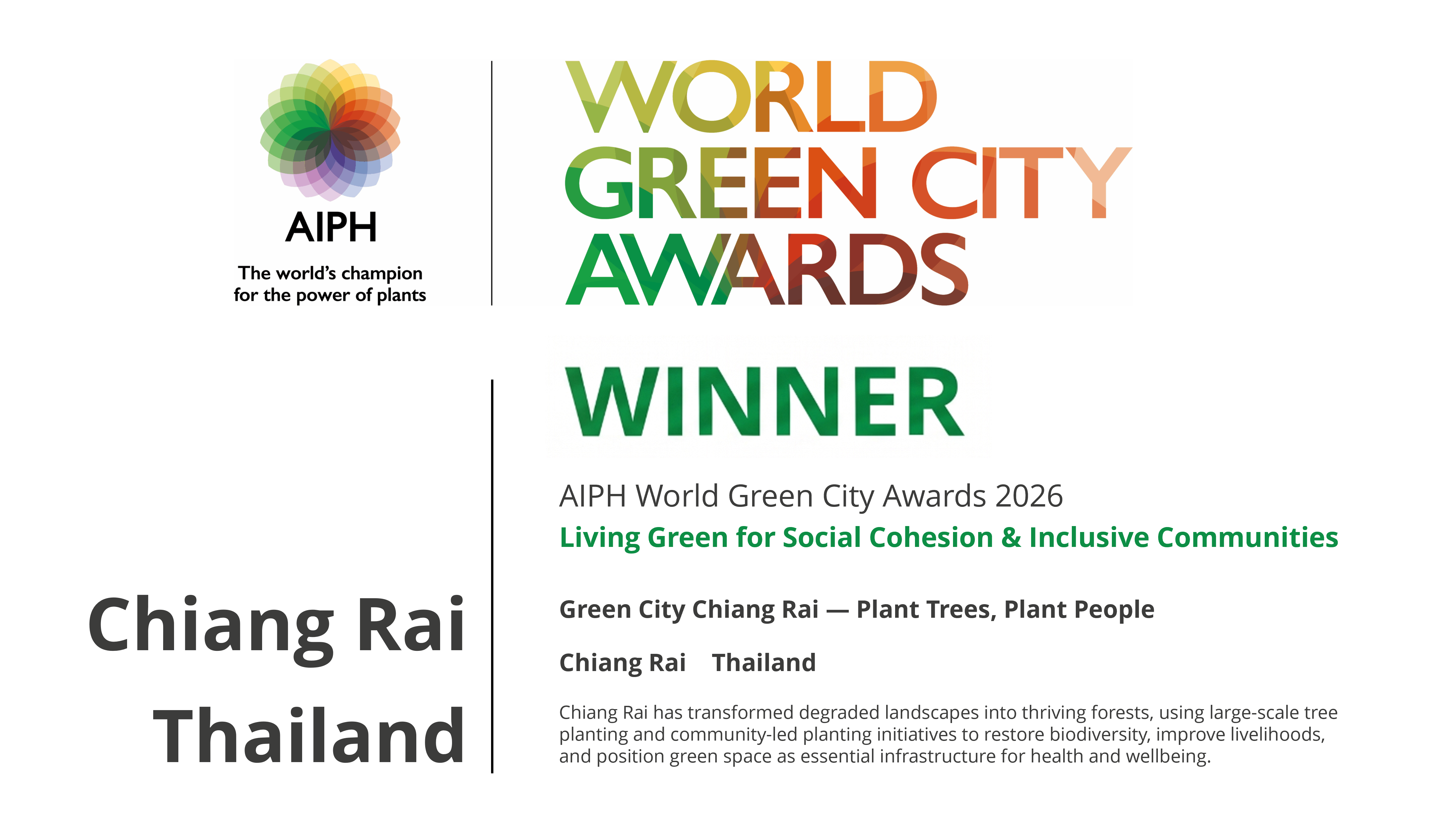
Chiang Rai Wins AIPH World Green City Award 2026, a First for Thailand
บารี, อิตาลี / เชียงราย, ประเทศไทย
เมืองไทยแห่งแรกที่ได้รับรางวัล
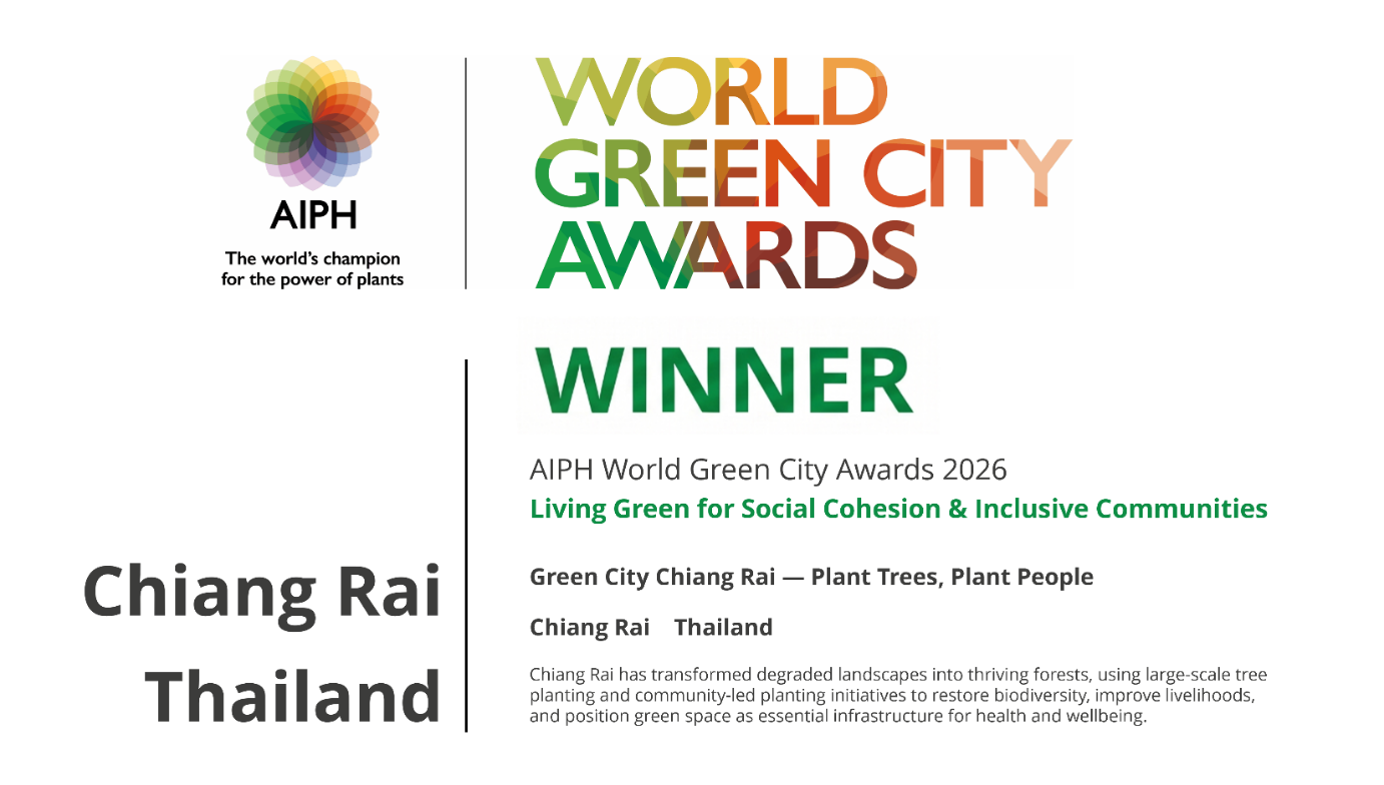
จังหวัดเชียงรายได้รับการประกาศให้เป็นผู้ชนะเลิศประเภท (Category Winner) ในหมวด “Living Green for Social Cohesion & Inclusive Communities” ของการประกวด AIPH World Green City Awards 2026 เมื่อวันที่ 15 กันยายน 2569 ระหว่างการประชุม AIPH Horticultural Industry Conference ซึ่งจัดขึ้นเป็นส่วนหนึ่งของกิจกรรมของ International Association of Horticultural Producers (AIPH) ณ ปราสาท Castello Svevo di Bari เมืองบารี ประเทศอิตาลี
นับเป็นครั้งแรกที่เมืองจากประเทศไทยได้รับรางวัลในระดับโลกจากการประกวดดังกล่าว นับตั้งแต่ AIPH เริ่มจัดการประกวดในปี 2565 โดยผลงานที่ได้รับรางวัลคือโครงการ “Green City Chiang Rai – Plant Trees, Plant People” ซึ่งดำเนินการผ่านความร่วมมือของ มหาวิทยาลัยแม่ฟ้าหลวง มูลนิธิแม่ฟ้าหลวง ในพระบรมราชูปถัมภ์ และ Heritage Asia Research Consortium (HARC)
เส้นทางจากเชียงรายสู่เวทีโลก
เส้นทางสู่รางวัลนี้เริ่มต้นอย่างเป็นทางการเมื่อวันที่ 11 กุมภาพันธ์ 2568 ในการประชุม “Green City Conference 2025: Nature, Culture, and City Life” ณ โรงแรม Le Meridien จังหวัดเชียงราย ซึ่งจัดขึ้นโดยความร่วมมือของ HARC, AIPH, สภาสถาปนิก, กรมโยธาธิการและผังเมือง, มหาวิทยาลัยแม่ฟ้าหลวง และหน่วยงานภาครัฐและเอกชนอีกกว่า 20 องค์กร https://www.harc.asia/harc-article_detail.php?id=34
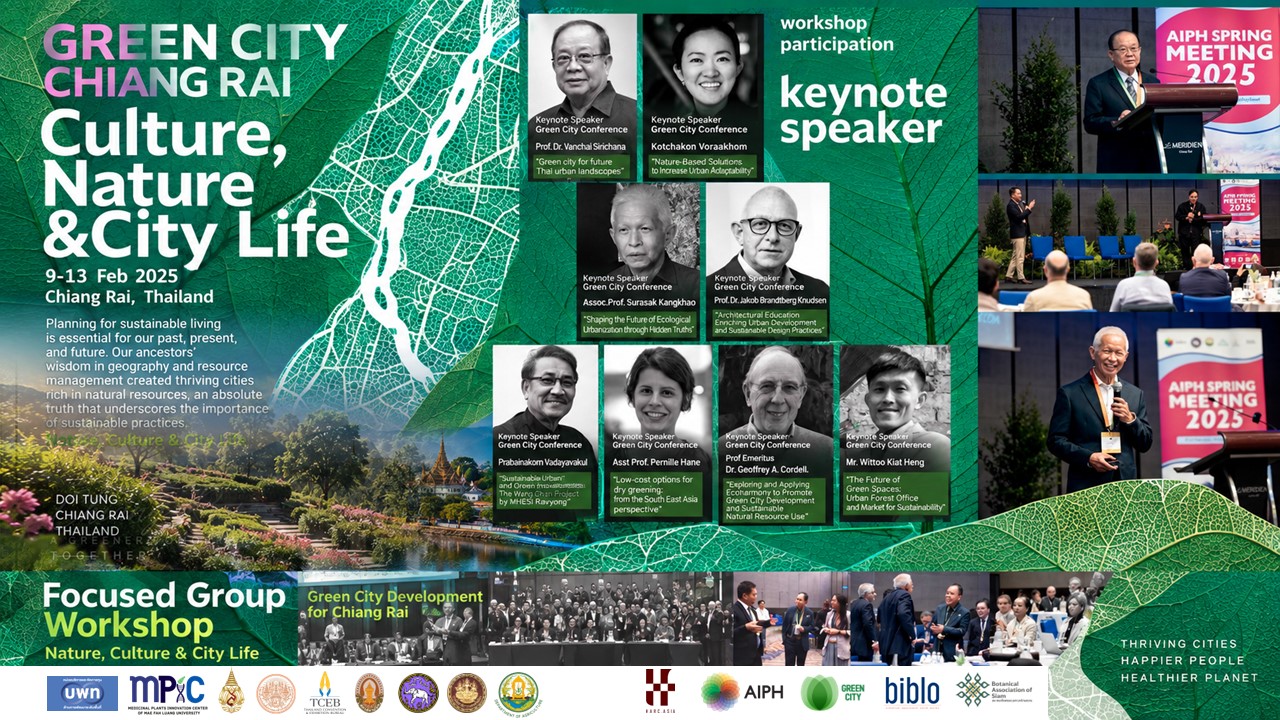
ภายในงานมีการจัด Focused Group Workshop เพื่อแลกเปลี่ยนความคิดเห็นและระดมข้อเสนอจากนักวิชาการและผู้เชี่ยวชาญกว่า 50 คน สำหรับวางแนวทางการพัฒนาเมืองสีเขียวของจังหวัดเชียงราย ขณะเดียวกัน เวทีดังกล่าวยังเป็นพื้นที่ที่ AIPH ใช้เปิดรับสมัครเข้าประกวด AIPH World Green City Awards 2026 อย่างเป็นทางการ ในช่วง AIPH Spring Meeting ซึ่งจัดขึ้นที่เชียงรายในเดือนเดียวกัน
จากจุดเริ่มต้นดังกล่าว เชียงรายได้รับคัดเลือกเป็นหนึ่งใน 21 เมืองผู้เข้ารอบสุดท้าย ในเดือนเมษายน 2569 ก่อนจะได้รับการประกาศเป็นผู้ชนะเลิศประเภทในวันที่ 15 กันยายน 2569
ทำไม “Plant Trees, Plant People” จึงได้รับการยอมรับในระดับโลก?
เชียงรายได้รับรางวัลในหมวด “Living Green for Social Cohesion & Inclusive Communities” หรือการพัฒนาพื้นที่สีเขียวเพื่อความเชื่อมโยงทางสังคมและชุมชนที่ครอบคลุม จากโครงการ “Green City Chiang Rai – Plant Trees, Plant People”
จุดสำคัญของโครงการคือการไม่ได้มองพื้นที่สีเขียวเป็นเพียงองค์ประกอบด้านภูมิทัศน์หรือระบบนิเวศ แต่ใช้ “ความเขียว” เป็นส่วนหนึ่งของการพัฒนาคุณภาพชีวิต การลดความเหลื่อมล้ำ และการสร้างการมีส่วนร่วมของคนในชุมชน
แนวคิดจึงมีลักษณะเป็นการเปลี่ยนผ่านจาก “Landscaping” สู่ “Human Capital” พื้นที่สีเขียวไม่ได้ทำหน้าที่เพียงสร้างสภาพแวดล้อมที่ดี แต่ยังเป็นพื้นที่ที่คนสามารถพบปะ สร้างความสัมพันธ์ เรียนรู้ และพัฒนาศักยภาพร่วมกัน
อีกประเด็นหนึ่งคือการนำ มรดกทางวัฒนธรรมมาทำงานร่วมกับสิ่งแวดล้อม บทบาทของ HARC แสดงให้เห็นว่าการรักษารากเหง้าทางวัฒนธรรมสามารถดำเนินไปพร้อมกับการพัฒนาเมืองสีเขียวสมัยใหม่ได้ โดยไม่จำเป็นต้องแยกสองเรื่องนี้ออกจากกัน และในด้าน Social Cohesion การใช้พื้นที่สาธารณะเป็นพื้นที่ร่วมของคนหลายกลุ่ม ยังช่วยสร้างโอกาสให้เกิดการมีส่วนร่วมและความสัมพันธ์ภายในชุมชน ซึ่งเป็นประเด็นสำคัญของการพัฒนาเมืองในปัจจุบัน
จาก “ปลูกป่า ปลูกคน” สู่ต้นแบบเมืองสีเขียว
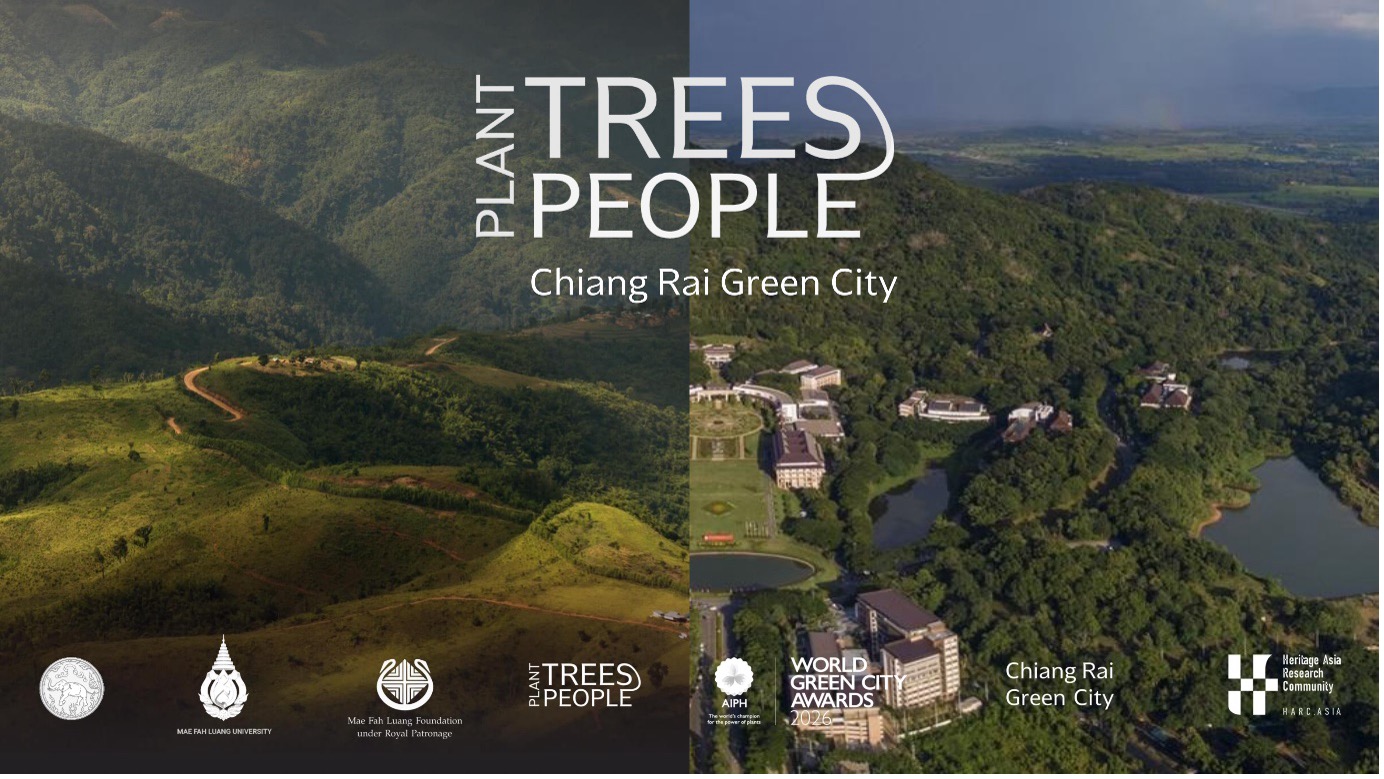
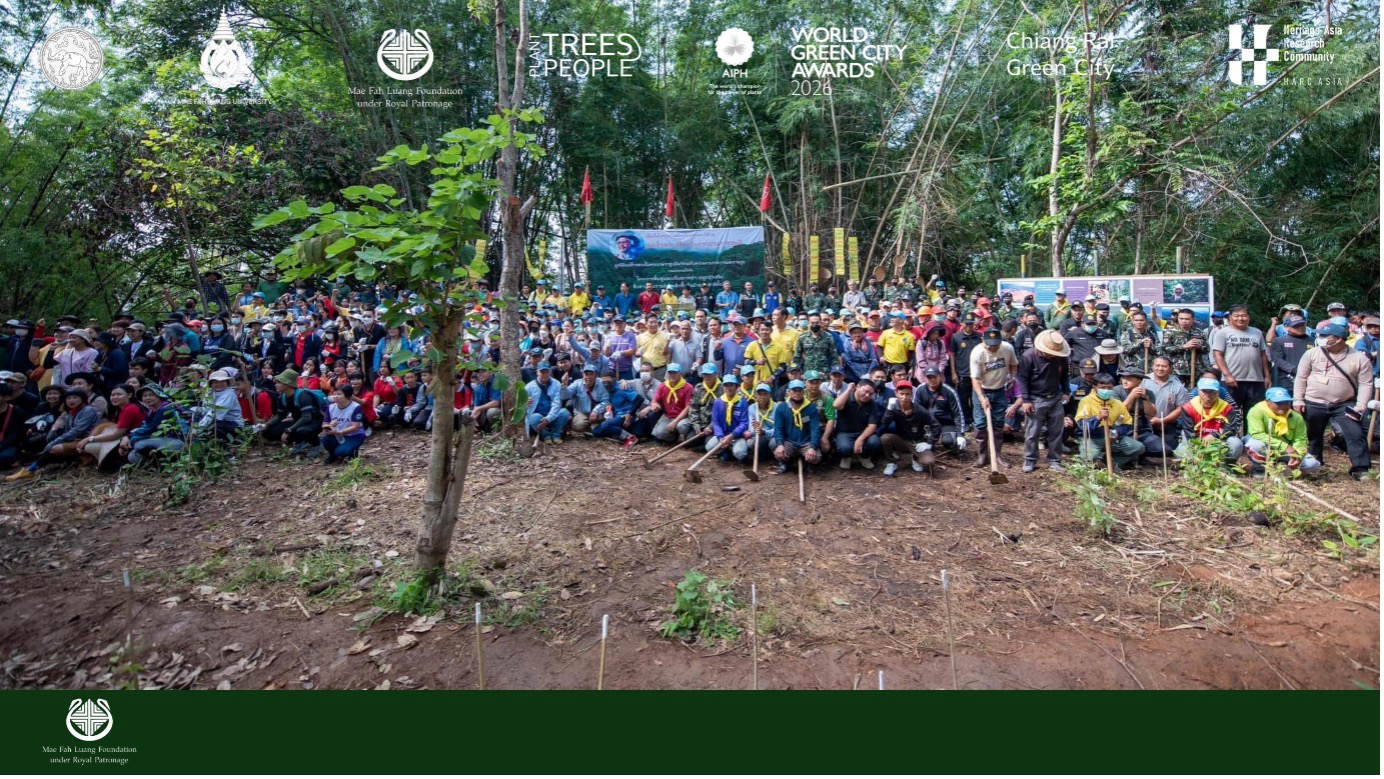
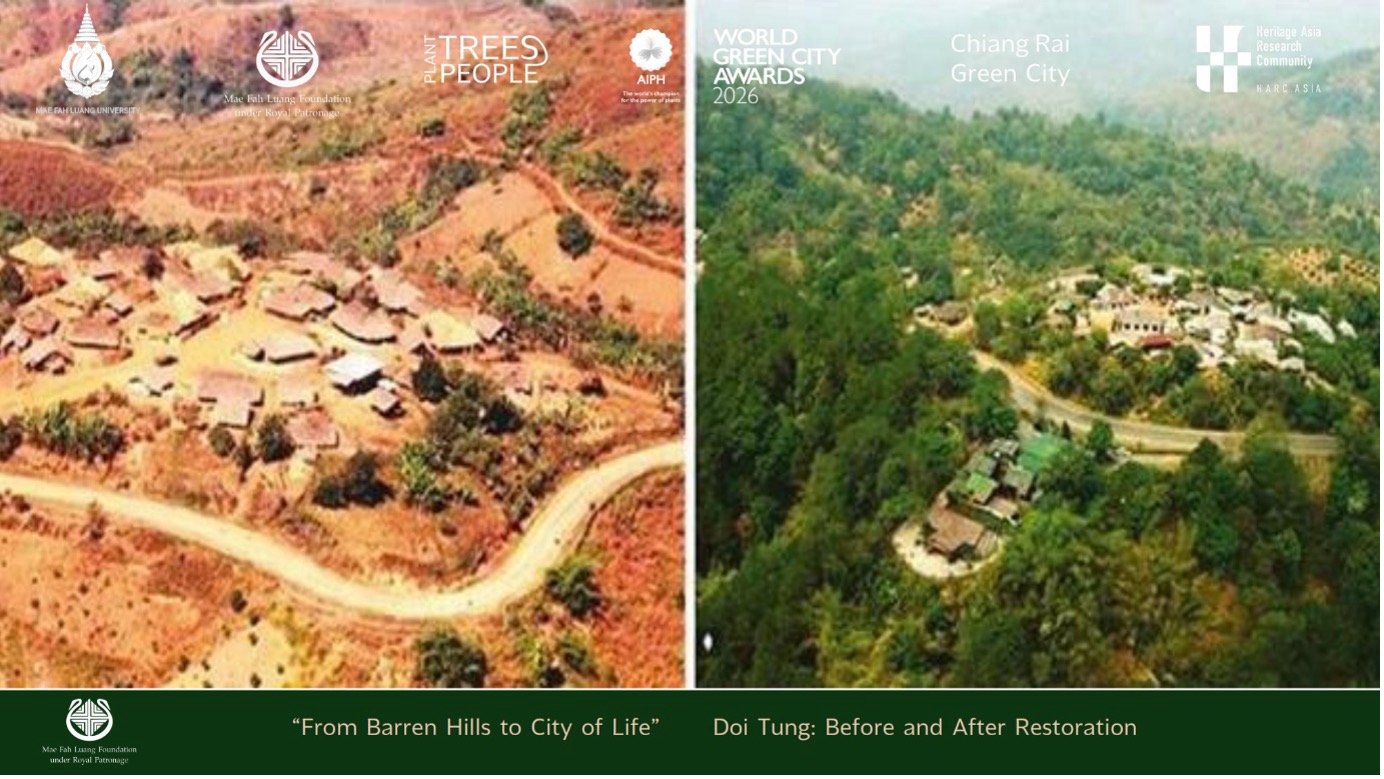
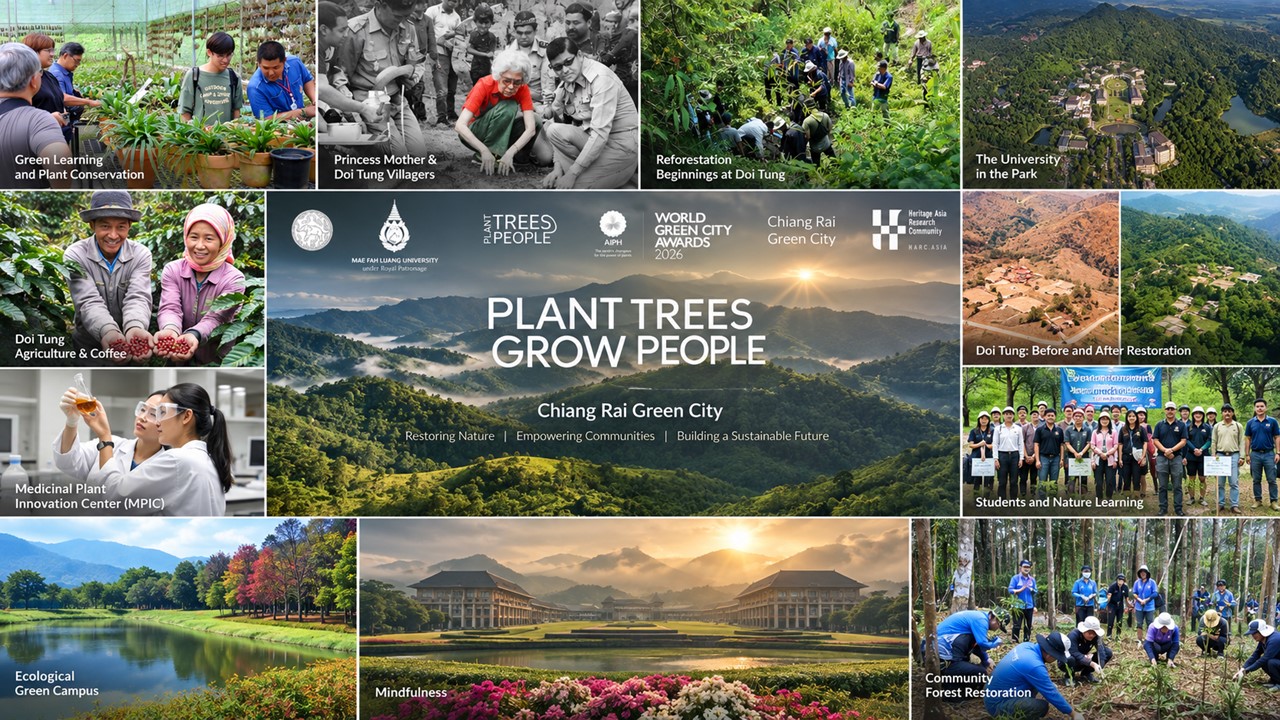
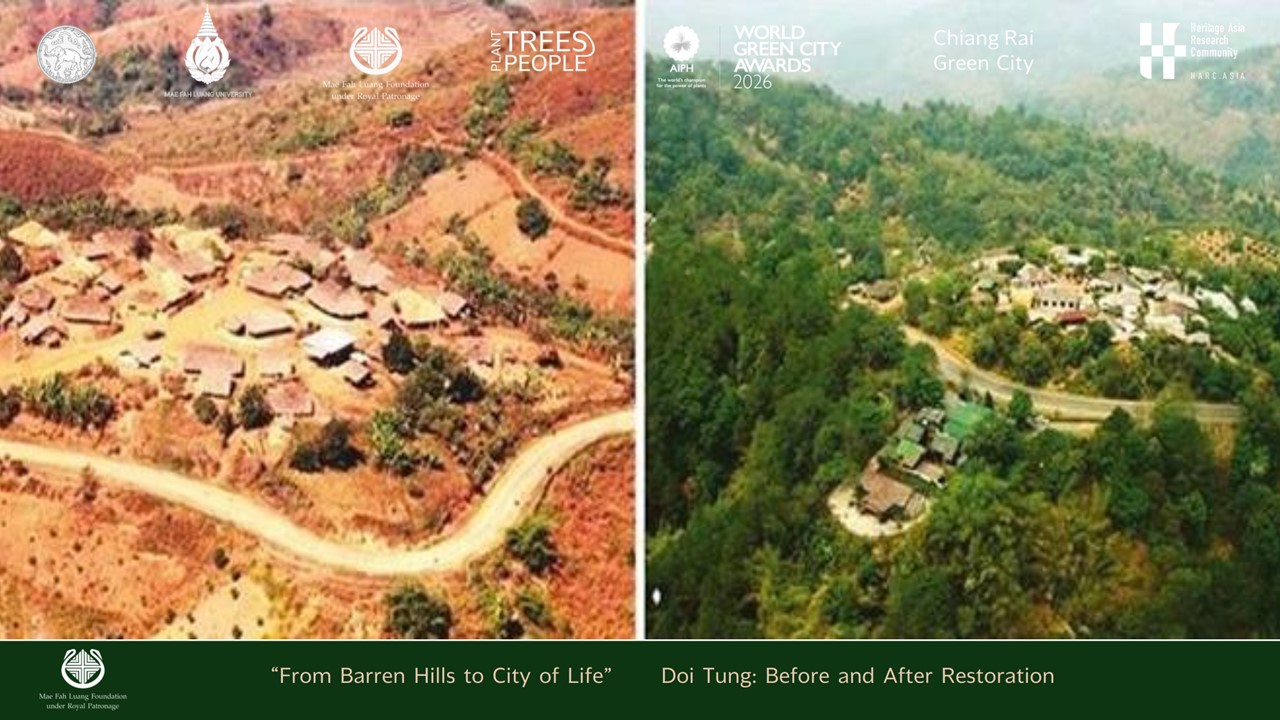
โครงการ “Plant Trees, Plant People” มีรากฐานมาจากแนวพระราชดำริ “ปลูกป่า ปลูกคน” ของสมเด็จพระศรีนครินทราบรมราชชนนี ซึ่งเริ่มต้นจากการฟื้นฟูป่าเสื่อมโทรมและแก้ปัญหาการปลูกฝิ่นในพื้นที่ดอยตุง ก่อนจะพัฒนาและต่อยอดมาเป็นแนวทางการพัฒนาเมืองสีเขียวในปัจจุบัน สะท้อนถึงการทำงานในระยะยาว ได้แก่ การฟื้นฟูพื้นที่สีเขียวกว่า 94,000 ไร่ การดูดซับคาร์บอนกว่า 200,000 ตันต่อปี การลดไฟป่าลง 97% และการฟื้นคืนพืชพื้นถิ่นกว่า 300 ชนิด รวมถึงสัตว์ป่ากว่า 100 ชนิด ในช่วงเวลา 15 ปี ตลอดจนโครงการยังสร้างรายได้ที่ยั่งยืนให้แก่ครัวเรือนกว่า 2,500 ครัวเรือน คิดเป็นมูลค่ารวมกว่า 600 ล้านบาทต่อปี สะท้อนให้เห็นว่า “ความเขียว” ในกรณีของเชียงรายไม่ได้หยุดอยู่ที่จำนวนต้นไม้ แต่เชื่อมโยงไปถึงการฟื้นฟูระบบนิเวศ การสร้างรายได้ การพัฒนาคุณภาพชีวิต และการเพิ่มความสามารถของชุมชนในการอยู่ร่วมกับทรัพยากรธรรมชาติ
นัยต่อการพัฒนาเมืองในไทย
รางวัลครั้งนี้เป็นอีกจุดอ้างอิงหนึ่งสำหรับการพัฒนาเมืองในประเทศไทย เพราะแสดงให้เห็นว่า เมืองรองที่ไม่ใช่เมืองหลักสามารถเข้าร่วมและได้รับการยอมรับในเวทีนานาชาติได้ เมื่อมีกรอบยุทธศาสตร์ที่ชัดเจน และเกิดความร่วมมือระหว่างสถาบันการศึกษา ภาคประชาสังคม หน่วยงานรัฐ และองค์กรวิจัย
อย่างไรก็ตาม รางวัลไม่ได้หมายความว่ากระบวนการพัฒนาสิ้นสุดลง ตรงกันข้าม สิ่งสำคัญหลังจากนี้คือการทำให้แนวคิดสามารถเดินหน้าต่อได้ในระยะยาว
ทีมงานเบื้องหลังโครงการระบุประเด็นสำคัญที่ต้องดำเนินการต่อ 3 ด้าน ได้แก่
- การรักษาความยั่งยืนของระบบนิเวศ (Sustainability)
- การจัดหาแหล่งทุนสนับสนุนอย่างต่อเนื่อง (Financial Viability)
- การขยายผล (Scale) แนวคิด “Plant Trees, Plant People” ไปยังเมืองอื่นในประเทศไทย โดยไม่สูญเสียแก่นและคุณค่าของแนวทางเดิม
ในมุมนี้ รางวัล AIPH จึงเป็นจุดเริ่มต้นของการนำบทเรียนจากเชียงรายไปพัฒนารูปแบบการพัฒนาเมืองที่เหมาะสมกับบริบทของพื้นที่อื่นต่อไป
จาก Green City สู่ Blue–Green–Human
เมืองในฐานะระบบชีวิต และอนาคตของการพัฒนาเมืองไทย
รางวัล AIPH World Green City Awards ที่เชียงรายได้รับผ่านเรื่อง “ความเขียว” เพียงมิติเดียว ความหมายของโครงการอาจถูกจำกัดอยู่ที่เรื่องต้นไม้และพื้นที่สีเขียว ทั้งที่กรอบคิดที่อยู่เบื้องหลังโครงการ Green City ของเชียงรายมีขอบเขตกว้างกว่านั้น
กรอบคิดดังกล่าวสามารถอธิบายผ่านแนวคิด Blue–Green–Human ซึ่งมองเมืองในฐานะระบบชีวิตที่ประกอบด้วย 3 ชั้นที่เชื่อมโยงกัน ได้แก่ น้ำ (Blue) พืชพรรณและพลังงานสะอาด (Green) และศักยภาพในการปรับตัวของมนุษย์ (Human)
แนวคิดนี้ทำให้ “Green City” ไม่ได้หมายถึงเมืองที่มีต้นไม้จำนวนมากเพียงอย่างเดียว แต่หมายถึงเมืองที่สามารถเชื่อมโยงระบบธรรมชาติ ระบบโครงสร้างพื้นฐาน และศักยภาพของผู้คนเข้าด้วยกัน
Blue: น้ำคือโครงสร้างพื้นฐานที่พัฒนาพื้นที่สีเขียว
การจัดการน้ำเป็นพื้นฐานสำคัญของการดำรงอยู่ของพื้นที่สีเขียว หากระบบน้ำไม่สามารถทำงานได้อย่างเหมาะสม พื้นที่สีเขียวก็ยากที่จะดำรงอยู่ได้ในระยะยาว
กรอบคิดนี้จึงมองว่าแม่น้ำ ลำคลอง และแหล่งน้ำเป็นทรัพยากรที่หล่อเลี้ยงระบบนิเวศสีเขียวทั้งหมด และเป็นองค์ประกอบที่ต้องได้รับการวางแผนร่วมกัน
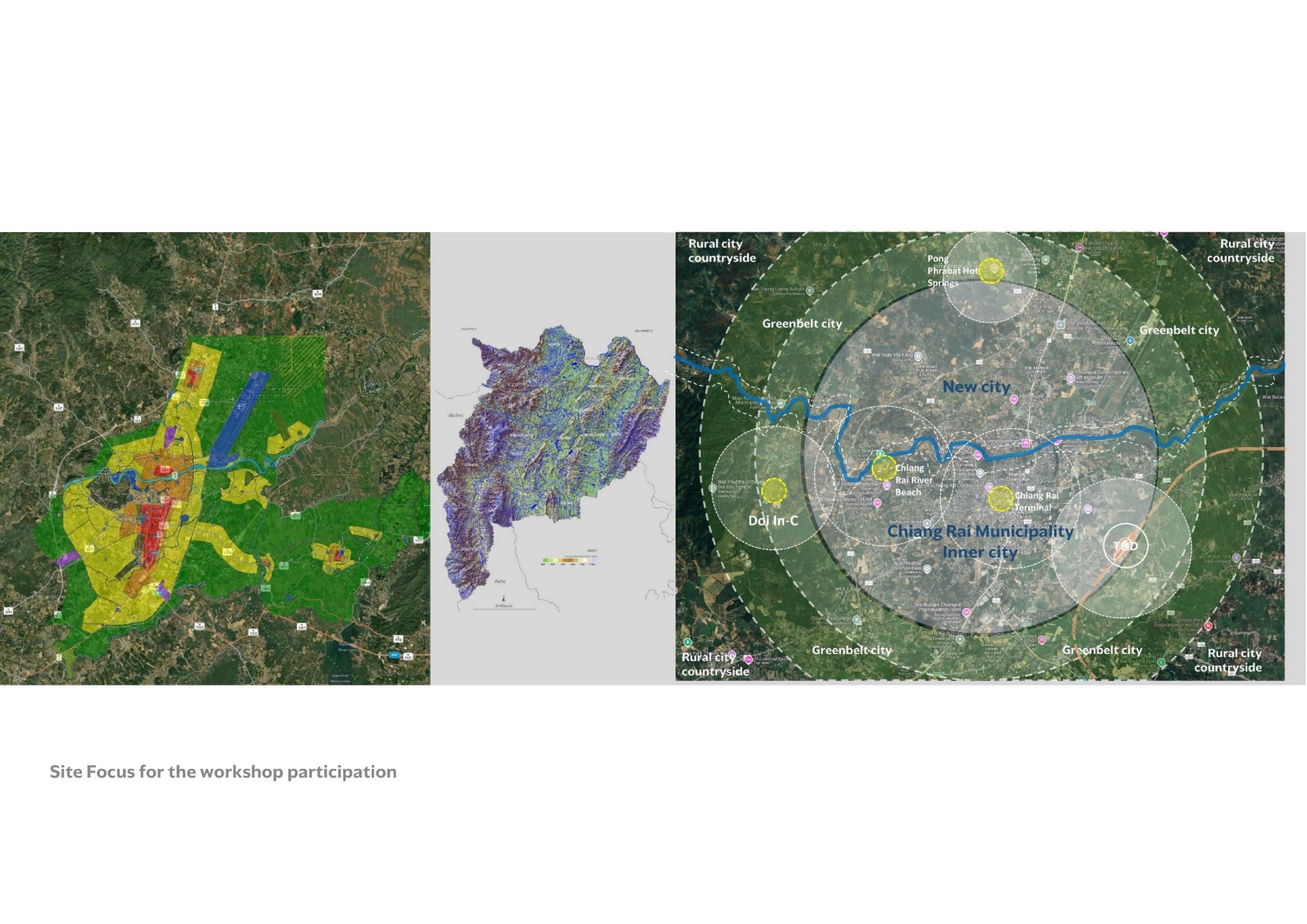
ในกรณีของเชียงราย ปัญหาน้ำท่วมซ้ำซากในตัวเมืองและอำเภอแม่สาย ซึ่งมีต้นตอจากแม่น้ำกกและแม่น้ำโขงทางตอนเหนือ ได้กลายเป็นจุดตั้งต้นของแนวคิด “ฝายชีวภาพเพื่อความหลากหลายทางชีวภาพ” (green biodiversity dam)
แนวคิดดังกล่าวออกแบบมาเพื่อชะลอและกระจายน้ำก่อนที่น้ำจะไหลเข้าสู่พื้นที่เมือง โดยเชื่อมต่อกับ ระเบียงสีเขียว (green corridor) รอบเมือง แทนที่จะพึ่งพาโครงสร้างคอนกรีตเพียงอย่างเดียว
การจัดการน้ำในลักษณะนี้ยังเชื่อมโยงกับปัญหาการปนเปื้อนโลหะหนักจากกิจกรรมเหมืองแร่ต้นน้ำ ซึ่งส่งผลกระทบต่อชีวิตของชาวประมงพื้นบ้าน จึงสะท้อนให้เห็นว่าการจัดการน้ำของเชียงรายไม่สามารถแยกออกจากประเด็นสิ่งแวดล้อมข้ามพรมแดนกับประเทศเพื่อนบ้านได้
Green: พื้นที่สีเขียวในฐานะส่วนหนึ่งของระบบเมือง
ในกรอบคิด Blue–Green–Human คำว่า “Green” หมายรวมถึงพืชพรรณ พลังงานสะอาด และการรีไซเคิล/อัพไซเคิล ซึ่งสอดคล้องกับประเด็นที่คณะกรรมการ AIPH ให้น้ำหนักไว้ในบทวิเคราะห์ก่อนหน้านี้
ความสำคัญจึงไม่ได้อยู่ที่ปริมาณพื้นที่สีเขียวเพียงอย่างเดียว แต่อยู่ที่ พื้นที่สีเขียวทำหน้าที่อะไรภายในระบบเมือง
พื้นที่สีเขียวสามารถทำงานควบคู่กันทั้งในด้านการฟื้นฟูระบบนิเวศและการควบคุมปริมาณและความเร็วของกระแสน้ำ จึงไม่ได้เป็นเพียงพื้นที่ปลูกต้นไม้เพื่อความสวยงาม แต่เป็นส่วนหนึ่งของระบบโครงสร้างพื้นฐานทางธรรมชาติของเมือง
Human: ศักยภาพการปรับตัวของคนคือแกนกลาง
องค์ประกอบที่ทำให้กรอบคิดนี้แตกต่างจากแนวคิด “เมืองสีเขียว” ทั่วไป คือ มิติมนุษย์
มนุษย์มีความสามารถในการอ่าน เขียน เรียนรู้ และถ่ายทอดความรู้ข้ามรุ่น ทำให้แต่ละชุมชนสามารถสั่งสมและต่อยอดภูมิปัญญาในการปรับตัวได้อย่างต่อเนื่อง
ดังนั้น ความยืดหยุ่นของชุมชนไม่ได้เกิดจากการพยายามต้านทานการเปลี่ยนแปลงเพียงอย่างเดียว แต่เกิดจาก การปรับวิถีชีวิตให้สอดคล้องกับสภาพภูมิศาสตร์และสิ่งแวดล้อมที่เปลี่ยนแปลงไป
ในความหมายนี้ “คน” จึงไม่ใช่เพียงผู้ได้รับประโยชน์จากการพัฒนาเมือง แต่เป็นองค์ประกอบสำคัญของระบบเมือง เป็นทั้งผู้เรียนรู้ ผู้ปรับตัว ผู้สร้างความรู้ และผู้ส่งต่อความสามารถในการอยู่ร่วมกับธรรมชาติจากรุ่นหนึ่งไปสู่อีกรุ่นหนึ่ง
จาก “Plant Trees, Plant People” สู่ Blue–Green–Human
หากมองผ่านกรอบ Blue–Green–Human รางวัลของเชียงรายจึงสะท้อนแนวทางการพัฒนาที่บูรณาการ การจัดการน้ำ พื้นที่สีเขียว และศักยภาพของคน เข้าด้วยกัน
- Blue คือการจัดการน้ำในฐานะโครงสร้างพื้นฐานที่สัมพันธ์กับสภาพภูมิศาสตร์ของเมือง
- Green คือการออกแบบพื้นที่สีเขียวให้ทำหน้าที่ทั้งฟื้นฟูระบบนิเวศ ควบคุมการไหลของน้ำ รองรับพลังงานสะอาด และส่งเสริมการใช้ทรัพยากรอย่างหมุนเวียน
- Human คือการพัฒนาความรู้ อาชีพ และศักยภาพของคน เพื่อให้ชุมชนสามารถปรับตัวต่อการเปลี่ยนแปลงของสภาพภูมิศาสตร์และสภาพแวดล้อมที่นับวันจะมีความรุนแรงมากขึ้นได้อย่างยั่งยืน
เมื่อทั้งสามองค์ประกอบทำงานร่วมกัน “เมืองสีเขียว” จึงไม่ใช่เพียงเมืองที่มีพื้นที่สีเขียวมากขึ้น แต่เป็น เมืองที่ระบบธรรมชาติ โครงสร้างพื้นฐาน และผู้คนสามารถพึ่งพาและเสริมศักยภาพซึ่งกันและกัน
นี่คือความหมายของแนวคิด “Plant Trees, Plant People” ที่สามารถก้าวจากเรื่องของการปลูกต้นไม้ไปสู่การ ปลูกระบบนิเวศ ปลูกความรู้ และปลูกศักยภาพของผู้คนไปพร้อมกัน
รางวัล AIPH World Green City Award 2026 จึงเป็นอีกหลักฐานหนึ่งว่า การออกแบบเมืองสามารถทำงานไปพร้อมกันได้ทั้งในมิติของ น้ำ ธรรมชาติ และมนุษย์ และบทเรียนจากเชียงรายยังสามารถนำไปพัฒนาต่อให้เหมาะสมกับบริบทของเมืองอื่นในประเทศไทยและในระดับนานาชาติได้
Source: Assoc. Prof. Surasak Kangkhao, “Natureculture / Nature, Culture and City Life.”
Chiang Rai Goes Global # The Road to the Award # Why Plant Trees, Plant People? # From Forests to Green City # What It Means for Thailand # Blue–Green–Human # Blue: Water # Green: Nature # Human: Adaptation # From Planting Trees to Growing People
พัฒนาการของแนวคิดจากเชียงรายสู่อุดรธานี
แนวคิดเริ่มจาก Green City ซึ่งให้ความสำคัญกับพื้นที่สีเขียวและคุณภาพชีวิต ก่อนพัฒนาสู่ Green Corridor ที่มองพื้นที่สีเขียวเป็นโครงข่ายเชื่อมโยงเมือง พื้นที่โดยรอบ และระบบนิเวศ ไม่ใช่พื้นที่ที่แยกออกจากกัน
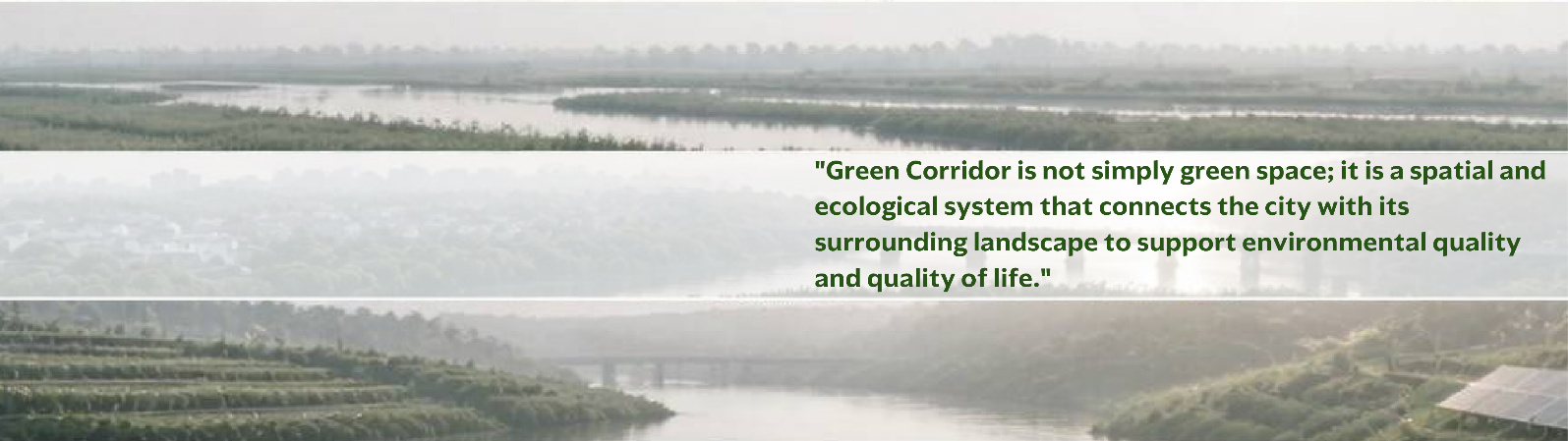
จากนั้นพัฒนาสู่ Blue-Green โดยนำ “น้ำ” เข้ามาเป็นส่วนหนึ่งของระบบพื้นที่สีเขียว เปลี่ยนจากการพึ่งพาโครงสร้างพื้นฐานสีเทาเพียงอย่างเดียว ไปสู่การออกแบบที่สามารถ รับ หน่วง และอยู่ร่วมกับน้ำ พร้อมกับแนวคิด Ururalism ที่เชื่อมโยงเมืองกับพื้นที่ชนบทและเกษตรกรรมโดยรอบ
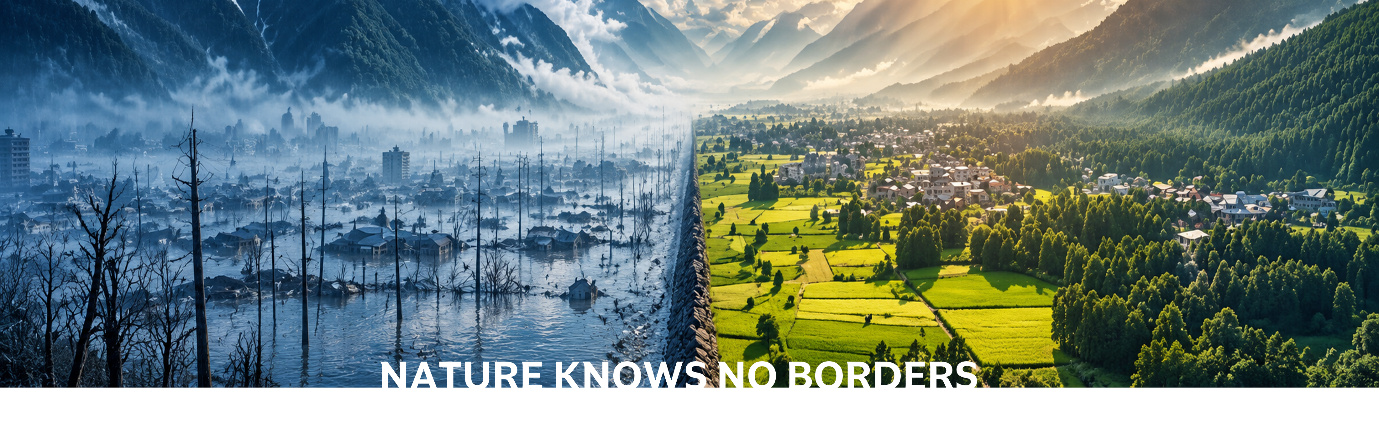
เมื่อขยายแนวคิดจากการออกแบบพื้นที่ไปสู่การบริหารจัดการ จึงเกิด OSM (Overall Spatial Management) ซึ่งมองพื้นที่ตาม ระบบภูมิศาสตร์ควบคู่กับขอบเขตการปกครอง เนื่องจากแม่น้ำ ลุ่มน้ำ และระบบนิเวศไม่ได้หยุดอยู่ตามเส้นแบ่งจังหวัด การจัดการจึงต้องประสานพื้นที่และหน่วยงานที่เกี่ยวข้องให้ทำงานร่วมกัน
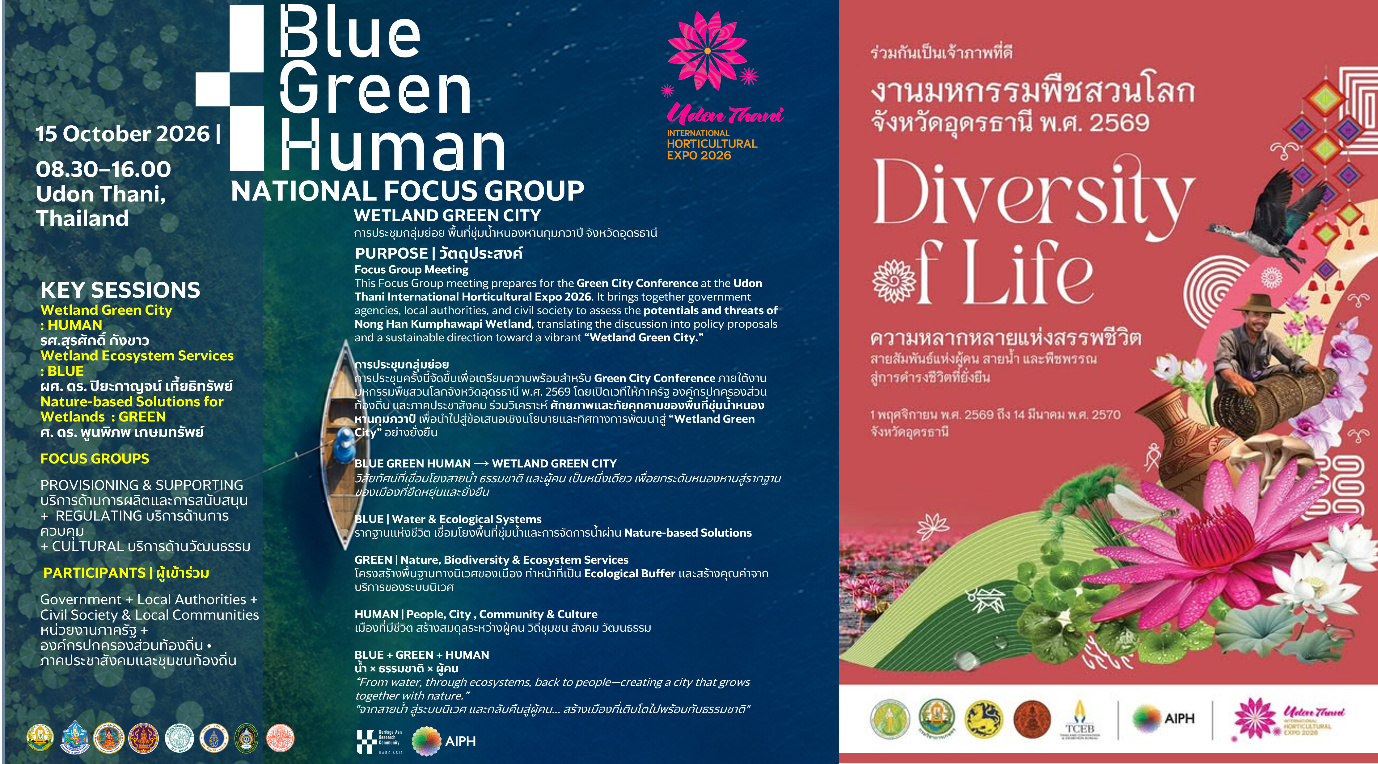
หัวใจสำคัญของการนำแนวคิดนี้ไปใช้กับพื้นที่อื่น คือ ต้องเข้าใจธรรมชาติของระบบน้ำก่อนกำหนดแนวทางพัฒนา โดยระบบน้ำแต่ละประเภทมีลักษณะแตกต่างกัน ได้แก่ Lotic ระบบน้ำไหล เช่น แม่น้ำและลำคลอง, Lentic ระบบน้ำนิ่งหรือน้ำไหลช้า เช่น บึง หนอง และทะเลสาบ และ Reservoir ซึ่งเป็นแหล่งน้ำที่มนุษย์สร้างหรือควบคุมด้วยโครงสร้าง แนวทางการจัดการจึงต้องสอดคล้องกับธรรมชาติของระบบน้ำแต่ละประเภท การต่อยอดจากเชียงรายมายัง อุดรธานี จึงไม่ใช่การนำรูปแบบเดิมมาทำซ้ำ แต่เป็นการปรับกรอบ Blue-Green-Human ให้เหมาะกับบริบทของ หนองหานกุมภวาปี ซึ่งเป็นพื้นที่ชุ่มน้ำ และนำไปสู่แนวคิด “Wetland Green City” ภายใต้งานมหกรรมพืชสวนโลกอุดรธานี โดยเชื่อมโยงน้ำ ระบบนิเวศ ความหลากหลายทางชีวภาพ ผู้คน ชุมชน และวัฒนธรรมเข้าด้วยกัน
การเปลี่ยนจาก Green City ไปสู่ Wetland Green City เป็นการเปลี่ยนวิธีคิดจากการ “ออกแบบพื้นที่” ไปสู่การ “บริหารจัดการระบบพื้นที่” โดยเริ่มจากการอ่านภูมิศาสตร์ เข้าใจระบบน้ำ และกำหนดแนวทางพัฒนาให้สอดคล้องกับธรรมชาติของแต่ละพื้นที่
Chiang Rai Wins AIPH World Green City Award 2026 — A First for Thailand
Bari, Italy / Chiang Rai, Thailand
Chiang Rai Province has been named Category Winner in "Living Green for Social Cohesion & Inclusive Communities" at the AIPH World Green City Awards 2026, announced on September 15, 2026 during the AIPH Horticultural Industry Conference, held as part of the International Association of Horticultural Producers (AIPH) activities at Castello Svevo di Bari, Italy.
This marks the first time a Thai city has won at this global level since AIPH began the awards in 2022. The winning entry was "Green City Chiang Rai – Plant Trees, Plant People," developed through collaboration between Mae Fah Luang University, the Mae Fah Luang Foundation under Royal Patronage, and the Heritage Asia Research Consortium (HARC).
What makes the project noteworthy is not simply the expansion of green space or tree-planting for aesthetic purposes, but the integration of environment, ecosystems, cultural heritage, public space, community economy, and human capacity development.
The Road from Chiang Rai to the World Stage
The path to this award began officially on February 11, 2025, at the "Green City Conference 2025: Nature, Culture, and City Life," held at Le Meridien Hotel, Chiang Rai, organized jointly by HARC, AIPH, the Architect Council of Thailand, the Department of Public Works and Town & Country Planning, Mae Fah Luang University, and more than 20 public and private organizations.
The conference included a Focused Group Workshop gathering input from over 50 academics and experts to shape Chiang Rai's green city development strategy. At the same event, AIPH officially opened applications for the AIPH World Green City Awards 2026 during its Spring Meeting, also held in Chiang Rai that month.
From that starting point, Chiang Rai was selected as one of 21 finalist cities in April 2026, before being announced Category Winner on September 15, 2026.
Why Was "Plant Trees, Plant People" Recognized Globally?
Chiang Rai won in the "Living Green for Social Cohesion & Inclusive Communities" category — green space development for social connection and inclusive communities — through the "Green City Chiang Rai – Plant Trees, Plant People" project.
The project's key strength is that it does not treat green space merely as landscape or ecological infrastructure, but uses "greenness" as a vehicle for improving quality of life, reducing inequality, and building community participation.
This reflects a shift from "landscaping" to "human capital" — green space functions not only to create a good environment, but as a space where people can meet, build relationships, learn, and develop capabilities together.
Another key element is bringing cultural heritage to work alongside the environment. HARC's role demonstrates that preserving cultural roots can proceed in parallel with modern green city development, without treating the two as separate. On social cohesion, using public space as shared ground for diverse groups helps create opportunities for participation and community relationship-building — a critical issue in urban development today.
From "Plant Forests, Plant People" to a Green City Model
The "Plant Trees, Plant People" project is rooted in the royal initiative "Plant Forests, Plant People" of Her Royal Highness Princess Srinagarindra, which began with restoring degraded forest and addressing opium cultivation in the Doi Tung area, before evolving into today's green city development approach. Long-term results include restoration of over 94,000 rai of green space, carbon absorption of over 200,000 tons per year, a 97% reduction in forest fires, and the recovery of over 300 native plant species and more than 100 wildlife species over 15 years. The project has also generated sustainable income for more than 2,500 households, totaling over 600 million baht per year — showing that "green" in Chiang Rai's case goes beyond tree counts to encompass ecosystem restoration, income generation, quality-of-life improvement, and strengthened community capacity to coexist with natural resources.
Implications for Urban Development in Thailand
This award serves as another reference point for urban development in Thailand, demonstrating that a secondary city — not a major metropolis — can compete and gain international recognition when equipped with a clear strategic framework and collaboration among academic institutions, civil society, government agencies, and research organizations.
However, winning the award does not mean the development process is complete. What matters going forward is ensuring the concept can be sustained long-term.
The project team identified three key areas for continued work:
- Sustainability — maintaining ecological sustainability
- Financial Viability — securing ongoing funding sources
- Scale — expanding "Plant Trees, Plant People" to other Thai cities without losing the essence and value of the original approach
In this sense, the AIPH award marks the starting point for translating lessons from Chiang Rai into development models suited to other contexts going forward.
From Green City to Blue–Green–Human
The City as a Living System, and the Future of Urban Development in Thailand
If the AIPH World Green City Award that Chiang Rai received is understood only through the single dimension of "greenness," the project's meaning risks being reduced to trees and green space alone — even though the underlying framework behind Chiang Rai's Green City project is far broader.
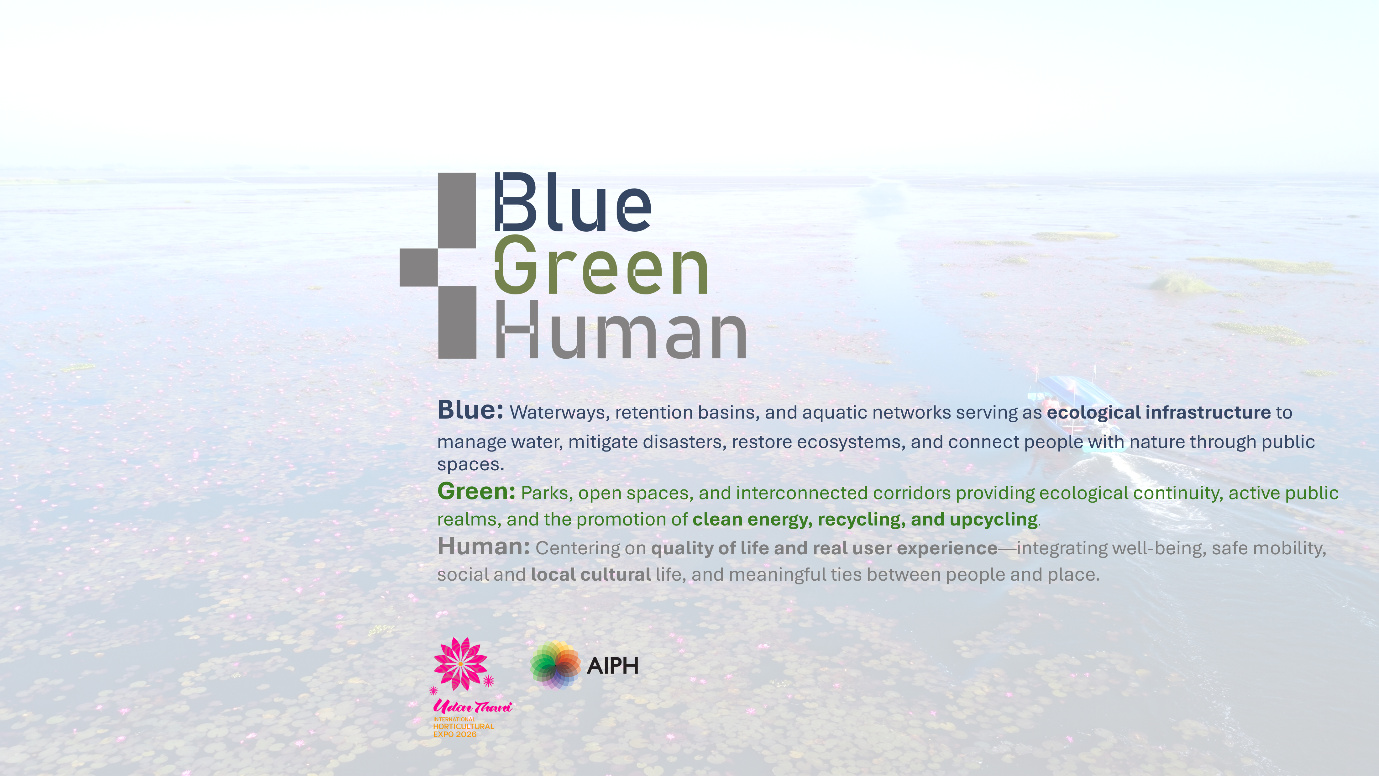
This framework can be explained through the concept of Blue–Green–Human, which views the city as a living system composed of three interconnected layers: water (Blue), vegetation and clean energy (Green), and human adaptive capacity (Human).
Under this framework, "Green City" does not simply mean a city with abundant trees, but a city that can connect natural systems, infrastructure systems, and human potential together.
Blue: Water as the Infrastructure That Sustains Green Space
Water management is the fundamental basis for the existence of green space. If the water system cannot function properly, green space cannot be sustained in the long run.
This framework treats rivers, canals, and water sources as resources that nourish the entire green ecosystem, and as components that must be planned together.
In Chiang Rai's case, recurring flooding in the city center and Mae Sai district — originating from the Kok and Mekong rivers to the north — became the starting point for the "green biodiversity dam" concept.
This concept is designed to slow and disperse water before it flows into urban areas, connecting with a green corridor around the city, rather than relying solely on concrete infrastructure.
This approach to water management also connects to heavy metal contamination from upstream mining activity, which affects local fishing communities — reflecting that Chiang Rai's water management cannot be separated from transboundary environmental issues with neighboring countries.
Green: Green Space as Part of the Urban System
Within the Blue–Green–Human framework, "Green" encompasses vegetation, clean energy, and recycling/upcycling — consistent with points the AIPH committee emphasized in its earlier analysis.
The importance lies not merely in the quantity of green space, but in what function green space serves within the urban system.
Green space can simultaneously restore ecosystems and regulate water volume and flow speed — making it not simply a decorative planting area, but part of the city's natural infrastructure system.
Human: Human Adaptive Capacity as the Core
What distinguishes this framework from typical "green city" concepts is the human dimension.
Humans can read, write, learn, and pass knowledge across generations, enabling each community to accumulate and build on adaptive wisdom continuously.
Community resilience, therefore, does not come from resisting change alone, but from adjusting ways of life in line with changing geography and environment.
In this sense, "people" are not merely beneficiaries of urban development, but a core component of the urban system — learners, adapters, knowledge creators, and carriers of the capacity to coexist with nature across generations.
From "Plant Trees, Plant People" to Blue–Green–Human
Viewed through the Blue–Green–Human framework, Chiang Rai's award reflects an integrated development approach combining water management, green space, and human potential:
- Blue is water management as infrastructure tied to the city's geography
- Green is green space designed to restore ecosystems, regulate water flow, support clean energy, and promote circular resource use
- Human is the development of knowledge, livelihoods, and human capacity so communities can sustainably adapt to increasingly severe geographic and environmental change
When all three components work together, a "green city" is no longer simply a city with more green space, but a city where natural systems, infrastructure, and people can depend on and reinforce one another.
This is the true meaning of "Plant Trees, Plant People" — moving beyond planting trees to growing ecosystems, growing knowledge, and growing human potential together.
The AIPH World Green City Award 2026 stands as further evidence that urban design can advance water, nature, and humanity simultaneously — and that the lessons from Chiang Rai can be adapted and developed further to suit other cities in Thailand and internationally.
Source: Assoc. Prof. Surasak Kangkhao, "Natureculture / Nature, Culture and City Life."
The Evolution of the Concept: From Chiang Rai to Udon Thani
The concept began with Green City, emphasizing green space and quality of life, before evolving into Green Corridor, which viewed green space as an interconnected network linking the city, surrounding areas, and ecosystems, rather than isolated patches.
It then evolved into Blue-Green, incorporating "water" as part of the green space system — shifting from sole reliance on gray infrastructure to designs that can receive, retain, and coexist with water — alongside the concept of Ururalism, connecting cities with surrounding rural and agricultural areas.
As the approach expanded from spatial design to spatial management, OSM (Overall Spatial Management) emerged, viewing space according to real geographic systems alongside administrative boundaries — since rivers, watersheds, and ecosystems do not stop at provincial lines. Management therefore requires coordinating across areas and relevant agencies.
The core principle for applying this concept elsewhere is that the nature of the water system must be understood before determining a development approach, as each water system type behaves differently: Lotic (flowing systems such as rivers and canals), Lentic (still or slow-moving systems such as marshes, wetlands, and lakes), and Reservoir (human-made or human-controlled water bodies). Management approaches must align with the nature of each water system type.
Building on Chiang Rai's model for Udon Thani, therefore, is not a matter of replicating the original format, but of adapting the Blue-Green-Human framework to suit the context of Nong Han Kumphawapi, a wetland area — leading to the concept of "Wetland Green City" under the Udon Thani International Horticultural Exposition, integrating water, ecosystems, biodiversity, people, communities, and culture.
The shift from Green City to Wetland Green City represents a change in thinking — from "designing space" to "managing spatial systems" — beginning with reading geography, understanding water systems, and shaping development approaches that align with the nature of each specific area.
Source: Assoc. Prof. Surasak Kangkhao, “Natureculture / Nature, Culture and City Life.”
Chiang Rai Goes Global # The Road to the Award # Why Plant Trees, Plant People? # From Forests to Green City # What It Means for Thailand # Blue–Green–Human # Blue: Water # Green: Nature # Human: Adaptation # From Planting Trees to Growing People